When my son was about 5 months old, I became part of a mother's group at my church. Many of them had had all natural births, so I decided I would shoot for that. After all, if they did it, I could too. So, when my son was about 9 months old, we decided to start trying. 3.5 months later I found out I was pregnant. We were thrilled!! I was due January 18th.
The pregnancy was pretty good. I had one bleeding episode that put me on bed rest from 30 to 36 weeks. I didn't go into preterm labor again! I ended up having her exactly one week before I was due.
Labor began with one contraction in the morning at my mom's group. It was one, and it hurt like hell. I had to breathe through it. One of my friends was sitting there and it really freaked her out. Some of us still laugh at that situation. We told her it was no big deal, probably just a Braxton-Hicks. I thought that myself!!
Now, my oldest was 20 months old, my husband worked 45 minutes away, I had no car or license. Good times! Imagine my horror when I really go into labor right after my husband left for work. Contractions, about 8 minutes apart begininng around 3pm. My adorable son is trying to reach out and comfort his mommy. I got in the tub to see if they would slow down. That didn't happen. So, I called my mother. I think it was about 4:30 when I called her. She grabbed my sister and stepdad and they made their way down here. It was around 6 when she got to the house. She knew I wanted a natural birth, so she completely supported me in it. We paged my husband (pager days, lol) and left for the hospital with my sister watching my son. Hmm, maybe seeing that peek at labor is why she's not in a hurry to have kids, lol, I've scarred her!
Upon arrival at the hospital, nobody really did anything. I got checked and was already 6cm. My mom helped me breathe and focus. When my husband arrived, my mom decided to step out of the room so we could just be together. At some point, I guess she heard me scream and came running back to the room. About 8:30ish, I was complete and ready to push. 20 minutes later, I held my firstborn daughter in my arms after a completely natural birth. She was known at the hospital for looking like a doll. I would have nurses pop in just to see her.
And the doctor was pretty clinical. At the time, I was pretty offended, but it did NOT make or break my "experience". With my oldest, that doctor was the same way. Maybe they had chips on their shoulders about young moms, I don't know or just maybe they don't get personally involved.
Friday, November 25, 2011


My Birth Stories- Child #2
When my son was about 5 months old, I became part of a mother's group at my church. Many of them had had all natural births, so I decided I would shoot for that. After all, if they did it, I could too. So, when my son was about 9 months old, we decided to start trying. 3.5 months later I found out I was pregnant. We were thrilled!! I was due January 18th.
The pregnancy was pretty good. I had one bleeding episode that put me on bed rest from 30 to 36 weeks. I didn't go into preterm labor again! I ended up having her exactly one week before I was due.
Labor began with one contraction in the morning at my mom's group. It was one, and it hurt like hell. I had to breathe through it. One of my friends was sitting there and it really freaked her out. Some of us still laugh at that situation. We told her it was no big deal, probably just a Braxton-Hicks. I thought that myself!!
Now, my oldest was 20 months old, my husband worked 45 minutes away, I had no car or license. Good times! Imagine my horror when I really go into labor right after my husband left for work. Contractions, about 8 minutes apart begininng around 3pm. My adorable son is trying to reach out and comfort his mommy. I got in the tub to see if they would slow down. That didn't happen. So, I called my mother. I think it was about 4:30 when I called her. She grabbed my sister and stepdad and they made their way down here. It was around 6 when she got to the house. She knew I wanted a natural birth, so she completely supported me in it. We paged my husband (pager days, lol) and left for the hospital with my sister watching my son. Hmm, maybe seeing that peek at labor is why she's not in a hurry to have kids, lol, I've scarred her!
Upon arrival at the hospital, nobody really did anything. I got checked and was already 6cm. My mom helped me breathe and focus. When my husband arrived, my mom decided to step out of the room so we could just be together. At some point, I guess she heard me scream and came running back to the room. About 8:30ish, I was complete and ready to push. 20 minutes later, I held my firstborn daughter in my arms after a completely natural birth. She was known at the hospital for looking like a doll. I would have nurses pop in just to see her.
And the doctor was pretty clinical. At the time, I was pretty offended, but it did NOT make or break my "experience". With my oldest, that doctor was the same way. Maybe they had chips on their shoulders about young moms, I don't know or just maybe they don't get personally involved.
The pregnancy was pretty good. I had one bleeding episode that put me on bed rest from 30 to 36 weeks. I didn't go into preterm labor again! I ended up having her exactly one week before I was due.
Labor began with one contraction in the morning at my mom's group. It was one, and it hurt like hell. I had to breathe through it. One of my friends was sitting there and it really freaked her out. Some of us still laugh at that situation. We told her it was no big deal, probably just a Braxton-Hicks. I thought that myself!!
Now, my oldest was 20 months old, my husband worked 45 minutes away, I had no car or license. Good times! Imagine my horror when I really go into labor right after my husband left for work. Contractions, about 8 minutes apart begininng around 3pm. My adorable son is trying to reach out and comfort his mommy. I got in the tub to see if they would slow down. That didn't happen. So, I called my mother. I think it was about 4:30 when I called her. She grabbed my sister and stepdad and they made their way down here. It was around 6 when she got to the house. She knew I wanted a natural birth, so she completely supported me in it. We paged my husband (pager days, lol) and left for the hospital with my sister watching my son. Hmm, maybe seeing that peek at labor is why she's not in a hurry to have kids, lol, I've scarred her!
Upon arrival at the hospital, nobody really did anything. I got checked and was already 6cm. My mom helped me breathe and focus. When my husband arrived, my mom decided to step out of the room so we could just be together. At some point, I guess she heard me scream and came running back to the room. About 8:30ish, I was complete and ready to push. 20 minutes later, I held my firstborn daughter in my arms after a completely natural birth. She was known at the hospital for looking like a doll. I would have nurses pop in just to see her.
And the doctor was pretty clinical. At the time, I was pretty offended, but it did NOT make or break my "experience". With my oldest, that doctor was the same way. Maybe they had chips on their shoulders about young moms, I don't know or just maybe they don't get personally involved.
Wednesday, November 23, 2011
Mary's life....... I'm so thankful
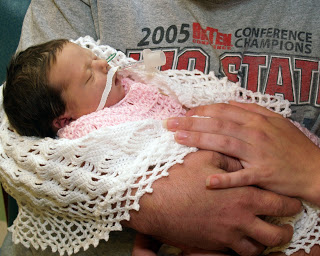
My daughter spent a whopping 6 hours and 54 minutes on this earth, but 9 months carried inside of me. Through the last 3.5 years, I've spent so much time being angry that I've overlooked the blessings her life bestowed upon me. Am I still angry about what happened and how it happened?? I won't lie, I'm still furious. However, now I'm able to look back on HER, and everything I have gained, with fondness.
I'm thankful for the people my daughter has brought into my life. Some have taught me so much about faith while grieving. One huge example that I have had is my friend Jill, who lost her son to hypoplastic left heart syndrome. I don't even think she realizes how many times I have read her blog and cried while in awe at her faith and strength. My friend Heidi, she has maintained her faith and now uses it to run StillBirthday, a site full of help and resources for parents who lose babies. She has also taken it upon herself to enlist doulas that can help grieving families (including myself). My dear friend Liz, who although her heart is hurting maintains her faith and does her best to help give other children/babies a loving home. All of these women reach out to other grieving moms as well.
I'm thankful for the support and love of all the ladies from The Skeptical OB. That blog has allowed me to meet other women like myself and women who truly care about those of us who have been harmed. Together, we have started this safe homebirth movement, consisting of all the blogs on my Dear Friends list. Although people would have others believe that we are just some mean spirited group of women, we are so incredibly far from that. We help one another and reach out to others. The amount of kindness that I have seen from these ladies has just blown me away. I also met my best friend Lindsay because of our groups. She is so sweet and spunky. We are like two peas in a pod. Our children have gained the others as friends and so have our husbands. I've been embraced by her family and it just doesn't get any better than that.
I'm thankful for the lessons my daughter taught me. Even though, at times, I really would love to give up, but I look at her precious face and find the strength to keep going. I never knew what kind of an impact someone could have on my life in such a short time. She taught me that in pain, I can still make a difference and help others. I have met so many women that have lost babies that have had as much an impact on me as I have. I'm able to take my loss and help someone else who is new to this "club". Losing a child is such a lonely experience and it really helps to know "I'm not alone and there IS hope". I can hold another mother's hand through all of this. There really is strength in numbers.
I'm so thankful that she was OUR daughter and OUR children's sister. She could of been one of those swept under the rug babies that are so rampant in the homebirth community. I couldn't imagine not caring about her and only thinking of myself. She hasn't just been forgotten about. At times, I admit, I've thought to myself "I wish someone else could of gone through it instead of us", but then I imagine what kind of parent they would of been to their deceased child and it makes me sad. My daughter has a family that still keeps her memory alive. We still go to the cemetery every sunday and care for her "prime real estate". She is part of every holiday. We are involved in our support group. My children, CHILDREN, reach out to their peers who lose siblings and teachers who have lost babies. Although my children have endured something so horrific so early on in life, they have become such compassionate and loving individuals. Man, I am so proud of them and so honored to be their mother. And my husband, he has been so wonderful. We have been the perfect pair for dealing with this together. His love and support has done wonders and vice versa. I'm thankful that he is my husband and the father of all of these children.
I'm thankful that she just existed. I'm glad she chose us as her family. I know losing her has been the MOST painful experience of my life, but I have survived and AM stronger than I ever knew I was. I will continue loving and missing her for the rest of my life, but I'm thankful she was here. I HAVE a beautiful, beautiful baby girl and I'm honored to be her mother.
Mary Beth, Mommy is so thankful for YOU.
I'm thankful for the people my daughter has brought into my life. Some have taught me so much about faith while grieving. One huge example that I have had is my friend Jill, who lost her son to hypoplastic left heart syndrome. I don't even think she realizes how many times I have read her blog and cried while in awe at her faith and strength. My friend Heidi, she has maintained her faith and now uses it to run StillBirthday, a site full of help and resources for parents who lose babies. She has also taken it upon herself to enlist doulas that can help grieving families (including myself). My dear friend Liz, who although her heart is hurting maintains her faith and does her best to help give other children/babies a loving home. All of these women reach out to other grieving moms as well.
I'm thankful for the support and love of all the ladies from The Skeptical OB. That blog has allowed me to meet other women like myself and women who truly care about those of us who have been harmed. Together, we have started this safe homebirth movement, consisting of all the blogs on my Dear Friends list. Although people would have others believe that we are just some mean spirited group of women, we are so incredibly far from that. We help one another and reach out to others. The amount of kindness that I have seen from these ladies has just blown me away. I also met my best friend Lindsay because of our groups. She is so sweet and spunky. We are like two peas in a pod. Our children have gained the others as friends and so have our husbands. I've been embraced by her family and it just doesn't get any better than that.
I'm thankful for the lessons my daughter taught me. Even though, at times, I really would love to give up, but I look at her precious face and find the strength to keep going. I never knew what kind of an impact someone could have on my life in such a short time. She taught me that in pain, I can still make a difference and help others. I have met so many women that have lost babies that have had as much an impact on me as I have. I'm able to take my loss and help someone else who is new to this "club". Losing a child is such a lonely experience and it really helps to know "I'm not alone and there IS hope". I can hold another mother's hand through all of this. There really is strength in numbers.
I'm so thankful that she was OUR daughter and OUR children's sister. She could of been one of those swept under the rug babies that are so rampant in the homebirth community. I couldn't imagine not caring about her and only thinking of myself. She hasn't just been forgotten about. At times, I admit, I've thought to myself "I wish someone else could of gone through it instead of us", but then I imagine what kind of parent they would of been to their deceased child and it makes me sad. My daughter has a family that still keeps her memory alive. We still go to the cemetery every sunday and care for her "prime real estate". She is part of every holiday. We are involved in our support group. My children, CHILDREN, reach out to their peers who lose siblings and teachers who have lost babies. Although my children have endured something so horrific so early on in life, they have become such compassionate and loving individuals. Man, I am so proud of them and so honored to be their mother. And my husband, he has been so wonderful. We have been the perfect pair for dealing with this together. His love and support has done wonders and vice versa. I'm thankful that he is my husband and the father of all of these children.
I'm thankful that she just existed. I'm glad she chose us as her family. I know losing her has been the MOST painful experience of my life, but I have survived and AM stronger than I ever knew I was. I will continue loving and missing her for the rest of my life, but I'm thankful she was here. I HAVE a beautiful, beautiful baby girl and I'm honored to be her mother.
Mary Beth, Mommy is so thankful for YOU.
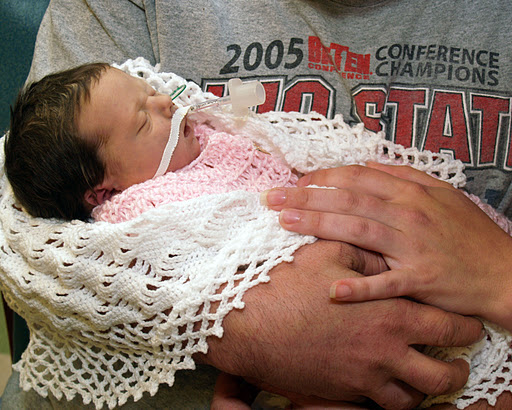
Mary's life....... I'm so thankful
My daughter spent a whopping 6 hours and 54 minutes on this earth, but 9 months carried inside of me. Through the last 3.5 years, I've spent so much time being angry that I've overlooked the blessings her life bestowed upon me. Am I still angry about what happened and how it happened?? I won't lie, I'm still furious. However, now I'm able to look back on HER, and everything I have gained, with fondness.
I'm thankful for the people my daughter has brought into my life. Some have taught me so much about faith while grieving. One huge example that I have had is my friend Jill, who lost her son to hypoplastic left heart syndrome. I don't even think she realizes how many times I have read her blog and cried while in awe at her faith and strength. My friend Heidi, she has maintained her faith and now uses it to run StillBirthday, a site full of help and resources for parents who lose babies. She has also taken it upon herself to enlist doulas that can help grieving families (including myself). My dear friend Liz, who although her heart is hurting maintains her faith and does her best to help give other children/babies a loving home. All of these women reach out to other grieving moms as well.
I'm thankful for the support and love of all the ladies from The Skeptical OB. That blog has allowed me to meet other women like myself and women who truly care about those of us who have been harmed. Together, we have started this safe homebirth movement, consisting of all the blogs on my Dear Friends list. Although people would have others believe that we are just some mean spirited group of women, we are so incredibly far from that. We help one another and reach out to others. The amount of kindness that I have seen from these ladies has just blown me away. I also met my best friend Lindsay because of our groups. She is so sweet and spunky. We are like two peas in a pod. Our children have gained the others as friends and so have our husbands. I've been embraced by her family and it just doesn't get any better than that.
I'm thankful for the lessons my daughter taught me. Even though, at times, I really would love to give up, but I look at her precious face and find the strength to keep going. I never knew what kind of an impact someone could have on my life in such a short time. She taught me that in pain, I can still make a difference and help others. I have met so many women that have lost babies that have had as much an impact on me as I have. I'm able to take my loss and help someone else who is new to this "club". Losing a child is such a lonely experience and it really helps to know "I'm not alone and there IS hope". I can hold another mother's hand through all of this. There really is strength in numbers.
I'm so thankful that she was OUR daughter and OUR children's sister. She could of been one of those swept under the rug babies that are so rampant in the homebirth community. I couldn't imagine not caring about her and only thinking of myself. She hasn't just been forgotten about. At times, I admit, I've thought to myself "I wish someone else could of gone through it instead of us", but then I imagine what kind of parent they would of been to their deceased child and it makes me sad. My daughter has a family that still keeps her memory alive. We still go to the cemetery every sunday and care for her "prime real estate". She is part of every holiday. We are involved in our support group. My children, CHILDREN, reach out to their peers who lose siblings and teachers who have lost babies. Although my children have endured something so horrific so early on in life, they have become such compassionate and loving individuals. Man, I am so proud of them and so honored to be their mother. And my husband, he has been so wonderful. We have been the perfect pair for dealing with this together. His love and support has done wonders and vice versa. I'm thankful that he is my husband and the father of all of these children.
I'm thankful that she just existed. I'm glad she chose us as her family. I know losing her has been the MOST painful experience of my life, but I have survived and AM stronger than I ever knew I was. I will continue loving and missing her for the rest of my life, but I'm thankful she was here. I HAVE a beautiful, beautiful baby girl and I'm honored to be her mother.
Mary Beth, Mommy is so thankful for YOU.

I'm thankful for the people my daughter has brought into my life. Some have taught me so much about faith while grieving. One huge example that I have had is my friend Jill, who lost her son to hypoplastic left heart syndrome. I don't even think she realizes how many times I have read her blog and cried while in awe at her faith and strength. My friend Heidi, she has maintained her faith and now uses it to run StillBirthday, a site full of help and resources for parents who lose babies. She has also taken it upon herself to enlist doulas that can help grieving families (including myself). My dear friend Liz, who although her heart is hurting maintains her faith and does her best to help give other children/babies a loving home. All of these women reach out to other grieving moms as well.
I'm thankful for the support and love of all the ladies from The Skeptical OB. That blog has allowed me to meet other women like myself and women who truly care about those of us who have been harmed. Together, we have started this safe homebirth movement, consisting of all the blogs on my Dear Friends list. Although people would have others believe that we are just some mean spirited group of women, we are so incredibly far from that. We help one another and reach out to others. The amount of kindness that I have seen from these ladies has just blown me away. I also met my best friend Lindsay because of our groups. She is so sweet and spunky. We are like two peas in a pod. Our children have gained the others as friends and so have our husbands. I've been embraced by her family and it just doesn't get any better than that.
I'm thankful for the lessons my daughter taught me. Even though, at times, I really would love to give up, but I look at her precious face and find the strength to keep going. I never knew what kind of an impact someone could have on my life in such a short time. She taught me that in pain, I can still make a difference and help others. I have met so many women that have lost babies that have had as much an impact on me as I have. I'm able to take my loss and help someone else who is new to this "club". Losing a child is such a lonely experience and it really helps to know "I'm not alone and there IS hope". I can hold another mother's hand through all of this. There really is strength in numbers.
I'm so thankful that she was OUR daughter and OUR children's sister. She could of been one of those swept under the rug babies that are so rampant in the homebirth community. I couldn't imagine not caring about her and only thinking of myself. She hasn't just been forgotten about. At times, I admit, I've thought to myself "I wish someone else could of gone through it instead of us", but then I imagine what kind of parent they would of been to their deceased child and it makes me sad. My daughter has a family that still keeps her memory alive. We still go to the cemetery every sunday and care for her "prime real estate". She is part of every holiday. We are involved in our support group. My children, CHILDREN, reach out to their peers who lose siblings and teachers who have lost babies. Although my children have endured something so horrific so early on in life, they have become such compassionate and loving individuals. Man, I am so proud of them and so honored to be their mother. And my husband, he has been so wonderful. We have been the perfect pair for dealing with this together. His love and support has done wonders and vice versa. I'm thankful that he is my husband and the father of all of these children.
I'm thankful that she just existed. I'm glad she chose us as her family. I know losing her has been the MOST painful experience of my life, but I have survived and AM stronger than I ever knew I was. I will continue loving and missing her for the rest of my life, but I'm thankful she was here. I HAVE a beautiful, beautiful baby girl and I'm honored to be her mother.
Mary Beth, Mommy is so thankful for YOU.

Friday, November 18, 2011
My Birth Stories-- Child #1
I am going to be doing a series sharing with you all my various labor/birth stories over the next few weeks. I feel that, in order to really understand me, I should share with you all. All in all, they really aren't too bad and I'm thankful for the lessons I have learned along the way. I think I may even share the story of my second miscarriage in the hopes that maybe it can help someone else.
When I got pregnant with my oldest in 1997 when I was 17 years old. I took Lamaze, but unfortunately, only got three classes in before I went into preterm labor. We had only left at 8pm on wednesday and my water broke at 1:30am. I was 36 weeks exact. Of course, when your water breaks and it just trickles, you wonder, "was that my water or is it me". So, I waited for a few hours until I was finally convinced that my water had broke. I had also begun feeling weird little things and they were 6 minutes apart. I tried waking up my fiancee, but he just said to let him know when they were 5 minutes apart because he was convinced I wet myself. At 6:30am, I convinced him that this was it and we needed to go to the hospital. Before we left, I called my step-grandmother to get the hospitals number so I could check with them. Called them and they did say to come in. Of course, my fiancee threw on his work clothes because he still wasn't convinced (Yes, the man is stubborn, lol).
Get to the hospital and get checked. Yep, water broke and was just trickling. I think we got there about 7am. Contractions weren't regular or doing anything and were pretty painless. My doctor figured it would be good to just break my water more. Fiancee went ahead to work so I just sat chatting with nurses. At one point, I was concerned about my long nails scratching my baby so the nurse found me some fingernail clippers! The doctor ordered some pitocin to help me along. Then my fiancee came back from work. The family he was working for was very old fashioned. so he had never shared my pregnancy with them until that day, and was promptly told to go be with me. Unfortunately, with my water being broken, I was losing too much fluid, so I got to have an internal catheter placed. Fun times!! The labor was quite painful, but with the help of my fiancee and nurses, I was able to breathe and focus on what I was doing. At one point they had to place an electrode in my son's scalp because he seemed to be having some trouble. The pitocin was increased and decreased throughout the day.
Around 7:45pm, I asked for an epidural. Got that and was able to rest. It was nice. Around 10:00pm, I was complete and began pushing. Epidural was turned off so I could feel everything. THAT was awesome (Can you sense the sarcasm??)!! Around 11:30, the doctor had to do an emergency c-section on another mom and, due to the decels my son kept having, he let me know if I didn't have him out soon, I would have to have one as well. When he came back to my room, he had to hurry up and don his outfit so he could catch my son. I was given an episiotomy too. After my son's head came out, the doctor found that the cord was around his neck three times. He was delivered blue and limp. He was handed off to a resus team and then taken to the NICU.
On top of my son's cord, his newborn exam found that he had a Ventricular Septal Defect. C was in the NICU until sunday when he was released. Monday, we were back at the hospital to check bilirubin levels and weight. Tuesday morning, same. Shortly after my stepmother took me home, she came back because the doctor had called and let us know C needed readmitted. We spent 3 more days in the nicu. Luckily, the hospital hooked us up with a private room and I was able to nurse and pump for him.
I continued to pump for two months until I got tired of it and put him back on the breast, where he stayed until he was 16 months old. We also supplemented from 5 months on. He was such a great baby and a total Momma's Boy!!
My Birth Stories-- Child #1
I am going to be doing a series sharing with you all my various labor/birth stories over the next few weeks. I feel that, in order to really understand me, I should share with you all. All in all, they really aren't too bad and I'm thankful for the lessons I have learned along the way. I think I may even share the story of my second miscarriage in the hopes that maybe it can help someone else.
When I got pregnant with my oldest in 1997 when I was 17 years old. I took Lamaze, but unfortunately, only got three classes in before I went into preterm labor. We had only left at 8pm on wednesday and my water broke at 1:30am. I was 36 weeks exact. Of course, when your water breaks and it just trickles, you wonder, "was that my water or is it me". So, I waited for a few hours until I was finally convinced that my water had broke. I had also begun feeling weird little things and they were 6 minutes apart. I tried waking up my fiancee, but he just said to let him know when they were 5 minutes apart because he was convinced I wet myself. At 6:30am, I convinced him that this was it and we needed to go to the hospital. Before we left, I called my step-grandmother to get the hospitals number so I could check with them. Called them and they did say to come in. Of course, my fiancee threw on his work clothes because he still wasn't convinced (Yes, the man is stubborn, lol).
Get to the hospital and get checked. Yep, water broke and was just trickling. I think we got there about 7am. Contractions weren't regular or doing anything and were pretty painless. My doctor figured it would be good to just break my water more. Fiancee went ahead to work so I just sat chatting with nurses. At one point, I was concerned about my long nails scratching my baby so the nurse found me some fingernail clippers! The doctor ordered some pitocin to help me along. Then my fiancee came back from work. The family he was working for was very old fashioned. so he had never shared my pregnancy with them until that day, and was promptly told to go be with me. Unfortunately, with my water being broken, I was losing too much fluid, so I got to have an internal catheter placed. Fun times!! The labor was quite painful, but with the help of my fiancee and nurses, I was able to breathe and focus on what I was doing. At one point they had to place an electrode in my son's scalp because he seemed to be having some trouble. The pitocin was increased and decreased throughout the day.
Around 7:45pm, I asked for an epidural. Got that and was able to rest. It was nice. Around 10:00pm, I was complete and began pushing. Epidural was turned off so I could feel everything. THAT was awesome (Can you sense the sarcasm??)!! Around 11:30, the doctor had to do an emergency c-section on another mom and, due to the decels my son kept having, he let me know if I didn't have him out soon, I would have to have one as well. When he came back to my room, he had to hurry up and don his outfit so he could catch my son. I was given an episiotomy too. After my son's head came out, the doctor found that the cord was around his neck three times. He was delivered blue and limp. He was handed off to a resus team and then taken to the NICU.
On top of my son's cord, his newborn exam found that he had a Ventricular Septal Defect. C was in the NICU until sunday when he was released. Monday, we were back at the hospital to check bilirubin levels and weight. Tuesday morning, same. Shortly after my stepmother took me home, she came back because the doctor had called and let us know C needed readmitted. We spent 3 more days in the nicu. Luckily, the hospital hooked us up with a private room and I was able to nurse and pump for him.
I continued to pump for two months until I got tired of it and put him back on the breast, where he stayed until he was 16 months old. We also supplemented from 5 months on. He was such a great baby and a total Momma's Boy!!
Friday, November 11, 2011
Friday, November 4, 2011
Planning a Safe Homebirth- The Midwife
This is written by my good friend Jane Hall, who happens to also be a homebirth mother::
Planning a Safe Homebirth
For women with full term, head down singleton babies where mom and baby are both healthy, home birth with a qualified attendant can be a safe choice to make. However, because of the basic risks involved with not being in a hospital settings if serious complications occur, there are some critical issues to look at when planning your home birth, both in terms of choice of midwife and in terms of how to plan your birth in ways that minimize risk. As a mom planning a 4th birth at home, here is how I make sure that I am planning home birth in the safest manner possible.
Midwife:
Bottom line: if your midwife doesn't cut it, you are not safe at home. End of story. If you cannot find a good enough midwife, hospital birth is the safest and most responsible choice even if it's not the setting you prefer. Keep an open mind and high standards, and remember that a solid attendant matters more than being in the home setting. Here are things to consider:
1. Education: Education matters. It does. All of the studies demonstrating that home birth is a reasonable option are from countries where midwives have university education and are able to practice in either home or hospital settings. If your midwife is not educated enough to be able to practice in any other first world country, look elsewhere. This is the person you are entrusting your life and your baby's life to; it's ok to say that the person responsible for safety in your birth should at least have a bachelor's level of education in midwifery. You don't feel guilty about expecting college education from your child's teacher, and shouldn't feel guilty or unreasonable about expecting it from the person you are hiring for your birth.
2. Experience: Without a high enough volume of births, your midwife will not have seen enough to recognize complications before they have the chance to spiral out of control. You don't want to be your midwife's first placental abruption or first encounter with respiratory distress in an infant. I take this a step further and will not choose a midwife without extensive hospital based experience. Women with complications are rightly in hospitals, and I want a midwife who has seen the worst that nature can throw at birth so that she has a better chance of recognizing a pattern of a complication that leads to an emergency when minutes are brain cells and can be the difference between life and death.
3. Practice: How your midwife practices will tell you a lot about whether she is a safe attendant for you to plan home birth with. For example:
* Does your midwife carry malpractice insurance? If not, there needs to be a very good, verifiable reason.
* How many clients is your midwife willing to take on in any given month? Too few births and she maybe out of practice, too many and she could be so exhausted and burned out that she could miss the early signs of problems or could miss your birth entirely.
* How smoothly does her practice run? Are appointments timely? Lab results readily available to you?
* Who else attends your birth? Do not under any circumstances give birth with a midwife who is willing to attend you without a second trained set of hands in case both mother and baby are experiencing complications at the same time. My preference is for the assistant to be a registered nurse, and the midwife and assistant should know eachother and work well enough together as a team to provide seamless care in emergency situations.
* Does your midwife have oxygen, IV fluids, antibiotics to treat for Group B Strep, medications to treat bleeding, and other equipment necessary in an emergency?
4. Integrity and Professionalism: Your provider's good character is your defense against unethical care. Here are things to consider:
* What do other medical professionals in your area think about your midwife? Do they feel comfortable collaborating with her when clients need more advanced care outside her scope of practice, or refer patients seeking home birth to her?
* Is your midwife willing to lie or violate professional standards of care in her care? Is she willing to lie about performing tests or about their results?
* Verify that your midwife's license is in good standing, and that she participates in peer review.
* Find out what continuing education your midwife participates in.
* Google your midwife and see what people are saying about her online. Many more cautious midwives can be unfairly described online as "medwives," and it's worth raising any complaints you find that concern you with your midwife to gauge her response.
* Look at your midwife's social media presence and how it lines up with HIPAA requirements. Your protected health information should stay protected and not be spread all over your midwife's Facebook page.
For women with full term, head down singleton babies where mom and baby are both healthy, home birth with a qualified attendant can be a safe choice to make. However, because of the basic risks involved with not being in a hospital settings if serious complications occur, there are some critical issues to look at when planning your home birth, both in terms of choice of midwife and in terms of how to plan your birth in ways that minimize risk. As a mom planning a 4th birth at home, here is how I make sure that I am planning home birth in the safest manner possible.
Midwife:
Bottom line: if your midwife doesn't cut it, you are not safe at home. End of story. If you cannot find a good enough midwife, hospital birth is the safest and most responsible choice even if it's not the setting you prefer. Keep an open mind and high standards, and remember that a solid attendant matters more than being in the home setting. Here are things to consider:
1. Education: Education matters. It does. All of the studies demonstrating that home birth is a reasonable option are from countries where midwives have university education and are able to practice in either home or hospital settings. If your midwife is not educated enough to be able to practice in any other first world country, look elsewhere. This is the person you are entrusting your life and your baby's life to; it's ok to say that the person responsible for safety in your birth should at least have a bachelor's level of education in midwifery. You don't feel guilty about expecting college education from your child's teacher, and shouldn't feel guilty or unreasonable about expecting it from the person you are hiring for your birth.
2. Experience: Without a high enough volume of births, your midwife will not have seen enough to recognize complications before they have the chance to spiral out of control. You don't want to be your midwife's first placental abruption or first encounter with respiratory distress in an infant. I take this a step further and will not choose a midwife without extensive hospital based experience. Women with complications are rightly in hospitals, and I want a midwife who has seen the worst that nature can throw at birth so that she has a better chance of recognizing a pattern of a complication that leads to an emergency when minutes are brain cells and can be the difference between life and death.
3. Practice: How your midwife practices will tell you a lot about whether she is a safe attendant for you to plan home birth with. For example:
* Does your midwife carry malpractice insurance? If not, there needs to be a very good, verifiable reason.
* How many clients is your midwife willing to take on in any given month? Too few births and she maybe out of practice, too many and she could be so exhausted and burned out that she could miss the early signs of problems or could miss your birth entirely.
* How smoothly does her practice run? Are appointments timely? Lab results readily available to you?
* Who else attends your birth? Do not under any circumstances give birth with a midwife who is willing to attend you without a second trained set of hands in case both mother and baby are experiencing complications at the same time. My preference is for the assistant to be a registered nurse, and the midwife and assistant should know eachother and work well enough together as a team to provide seamless care in emergency situations.
* Does your midwife have oxygen, IV fluids, antibiotics to treat for Group B Strep, medications to treat bleeding, and other equipment necessary in an emergency?
4. Integrity and Professionalism: Your provider's good character is your defense against unethical care. Here are things to consider:
* What do other medical professionals in your area think about your midwife? Do they feel comfortable collaborating with her when clients need more advanced care outside her scope of practice, or refer patients seeking home birth to her?
* Is your midwife willing to lie or violate professional standards of care in her care? Is she willing to lie about performing tests or about their results?
* Verify that your midwife's license is in good standing, and that she participates in peer review.
* Find out what continuing education your midwife participates in.
* Google your midwife and see what people are saying about her online. Many more cautious midwives can be unfairly described online as "medwives," and it's worth raising any complaints you find that concern you with your midwife to gauge her response.
* Look at your midwife's social media presence and how it lines up with HIPAA requirements. Your protected health information should stay protected and not be spread all over your midwife's Facebook page.
Planning a Safe Homebirth- The Midwife
This is written by my good friend Jane Hall, who happens to also be a homebirth mother::
Planning a Safe Homebirth
For women with full term, head down singleton babies where mom and baby are both healthy, home birth with a qualified attendant can be a safe choice to make. However, because of the basic risks involved with not being in a hospital settings if serious complications occur, there are some critical issues to look at when planning your home birth, both in terms of choice of midwife and in terms of how to plan your birth in ways that minimize risk. As a mom planning a 4th birth at home, here is how I make sure that I am planning home birth in the safest manner possible.
Midwife:
Bottom line: if your midwife doesn't cut it, you are not safe at home. End of story. If you cannot find a good enough midwife, hospital birth is the safest and most responsible choice even if it's not the setting you prefer. Keep an open mind and high standards, and remember that a solid attendant matters more than being in the home setting. Here are things to consider:
1. Education: Education matters. It does. All of the studies demonstrating that home birth is a reasonable option are from countries where midwives have university education and are able to practice in either home or hospital settings. If your midwife is not educated enough to be able to practice in any other first world country, look elsewhere. This is the person you are entrusting your life and your baby's life to; it's ok to say that the person responsible for safety in your birth should at least have a bachelor's level of education in midwifery. You don't feel guilty about expecting college education from your child's teacher, and shouldn't feel guilty or unreasonable about expecting it from the person you are hiring for your birth.
2. Experience: Without a high enough volume of births, your midwife will not have seen enough to recognize complications before they have the chance to spiral out of control. You don't want to be your midwife's first placental abruption or first encounter with respiratory distress in an infant. I take this a step further and will not choose a midwife without extensive hospital based experience. Women with complications are rightly in hospitals, and I want a midwife who has seen the worst that nature can throw at birth so that she has a better chance of recognizing a pattern of a complication that leads to an emergency when minutes are brain cells and can be the difference between life and death.
3. Practice: How your midwife practices will tell you a lot about whether she is a safe attendant for you to plan home birth with. For example:
* Does your midwife carry malpractice insurance? If not, there needs to be a very good, verifiable reason.
* How many clients is your midwife willing to take on in any given month? Too few births and she maybe out of practice, too many and she could be so exhausted and burned out that she could miss the early signs of problems or could miss your birth entirely.
* How smoothly does her practice run? Are appointments timely? Lab results readily available to you?
* Who else attends your birth? Do not under any circumstances give birth with a midwife who is willing to attend you without a second trained set of hands in case both mother and baby are experiencing complications at the same time. My preference is for the assistant to be a registered nurse, and the midwife and assistant should know eachother and work well enough together as a team to provide seamless care in emergency situations.
* Does your midwife have oxygen, IV fluids, antibiotics to treat for Group B Strep, medications to treat bleeding, and other equipment necessary in an emergency?
4. Integrity and Professionalism: Your provider's good character is your defense against unethical care. Here are things to consider:
* What do other medical professionals in your area think about your midwife? Do they feel comfortable collaborating with her when clients need more advanced care outside her scope of practice, or refer patients seeking home birth to her?
* Is your midwife willing to lie or violate professional standards of care in her care? Is she willing to lie about performing tests or about their results?
* Verify that your midwife's license is in good standing, and that she participates in peer review.
* Find out what continuing education your midwife participates in.
* Google your midwife and see what people are saying about her online. Many more cautious midwives can be unfairly described online as "medwives," and it's worth raising any complaints you find that concern you with your midwife to gauge her response.
* Look at your midwife's social media presence and how it lines up with HIPAA requirements. Your protected health information should stay protected and not be spread all over your midwife's Facebook page.
For women with full term, head down singleton babies where mom and baby are both healthy, home birth with a qualified attendant can be a safe choice to make. However, because of the basic risks involved with not being in a hospital settings if serious complications occur, there are some critical issues to look at when planning your home birth, both in terms of choice of midwife and in terms of how to plan your birth in ways that minimize risk. As a mom planning a 4th birth at home, here is how I make sure that I am planning home birth in the safest manner possible.
Midwife:
Bottom line: if your midwife doesn't cut it, you are not safe at home. End of story. If you cannot find a good enough midwife, hospital birth is the safest and most responsible choice even if it's not the setting you prefer. Keep an open mind and high standards, and remember that a solid attendant matters more than being in the home setting. Here are things to consider:
1. Education: Education matters. It does. All of the studies demonstrating that home birth is a reasonable option are from countries where midwives have university education and are able to practice in either home or hospital settings. If your midwife is not educated enough to be able to practice in any other first world country, look elsewhere. This is the person you are entrusting your life and your baby's life to; it's ok to say that the person responsible for safety in your birth should at least have a bachelor's level of education in midwifery. You don't feel guilty about expecting college education from your child's teacher, and shouldn't feel guilty or unreasonable about expecting it from the person you are hiring for your birth.
2. Experience: Without a high enough volume of births, your midwife will not have seen enough to recognize complications before they have the chance to spiral out of control. You don't want to be your midwife's first placental abruption or first encounter with respiratory distress in an infant. I take this a step further and will not choose a midwife without extensive hospital based experience. Women with complications are rightly in hospitals, and I want a midwife who has seen the worst that nature can throw at birth so that she has a better chance of recognizing a pattern of a complication that leads to an emergency when minutes are brain cells and can be the difference between life and death.
3. Practice: How your midwife practices will tell you a lot about whether she is a safe attendant for you to plan home birth with. For example:
* Does your midwife carry malpractice insurance? If not, there needs to be a very good, verifiable reason.
* How many clients is your midwife willing to take on in any given month? Too few births and she maybe out of practice, too many and she could be so exhausted and burned out that she could miss the early signs of problems or could miss your birth entirely.
* How smoothly does her practice run? Are appointments timely? Lab results readily available to you?
* Who else attends your birth? Do not under any circumstances give birth with a midwife who is willing to attend you without a second trained set of hands in case both mother and baby are experiencing complications at the same time. My preference is for the assistant to be a registered nurse, and the midwife and assistant should know eachother and work well enough together as a team to provide seamless care in emergency situations.
* Does your midwife have oxygen, IV fluids, antibiotics to treat for Group B Strep, medications to treat bleeding, and other equipment necessary in an emergency?
4. Integrity and Professionalism: Your provider's good character is your defense against unethical care. Here are things to consider:
* What do other medical professionals in your area think about your midwife? Do they feel comfortable collaborating with her when clients need more advanced care outside her scope of practice, or refer patients seeking home birth to her?
* Is your midwife willing to lie or violate professional standards of care in her care? Is she willing to lie about performing tests or about their results?
* Verify that your midwife's license is in good standing, and that she participates in peer review.
* Find out what continuing education your midwife participates in.
* Google your midwife and see what people are saying about her online. Many more cautious midwives can be unfairly described online as "medwives," and it's worth raising any complaints you find that concern you with your midwife to gauge her response.
* Look at your midwife's social media presence and how it lines up with HIPAA requirements. Your protected health information should stay protected and not be spread all over your midwife's Facebook page.
Subscribe to:
Posts (Atom)
